![Head Banner [Converted] copy 1](https://quantedgefintech.com/uploads/04e6c98f64a3419bfaa5d69d6cb92c7a.png)
Invest In
Choose funds aligned to your goals, risk profile, and time horizon with a clear, disciplined approach.

A mutual fund investment is a professionally managed option where money from multiple investors is pooled and invested in assets like equities, bonds, or money market instruments. When you invest in mutual funds online, you buy units at the Net Asset Value (NAV), which reflects the fund's current value.
Each mutual fund scheme is managed by a fund manager who makes investment decisions based on research and risk analysis. Mutual funds are regulated by SEBI, ensuring transparency and investor protection.
There are different mutual fund schemes in India, such as best large cap mutual funds for long-term growth, fixed income mutual funds and best debt liquid funds for stability, and best multi cap mutual funds for balanced exposure.
Investors can also use a SIP investment plan, which allows regular investing and helps manage market volatility. SIP investment in mutual funds builds discipline and supports long-term goals, whether it's the best SIP plan for 5 years or the best SIP plan for 10 years.
The funds invest predominantly in stocks of listed companies based on the market capitalisation guidelines of SEBI, which are as under

Invest in top 100 well-established companies; relatively stable with moderate returns.
Invest in medium-sized companies; offer higher growth potential with slightly higher risk.
Invest in smaller companies; high risk but can generate very high returns over time.
Invest across large, mid, and small caps; provide flexibility and diversification.
Invest in very short-term instruments; ideal for parking surplus money with high liquidity.
Invest in short-duration bonds; offer better returns than savings accounts with low risk.
Invest in high-rated company bonds; provide stable income with moderate safety.
Actively adjust investment based on interest rate movements; suitable for changing market conditions.
Maintain a mix of equity and debt to provide moderate growth with reduced risk.
Higher allocation to equity; suitable for investors seeking growth with some stability.
Higher allocation to debt; suitable for regular income with lower risk.
Invest across equity, debt, gold, etc.; provide strong diversification.
Track top 50 companies in India.
Track 30 leading companies in India.
Invest in specific sectors like IT, Pharma, Banking; higher risk due to concentration.
Invest in gold digitally; track gold prices without physical holding.

Cost plays a key role in long-term portfolio success. Mutual fund investment allows you to diversify across assets at a lower cost compared to direct investing. With online mutual fund investment, you can access a wide range of mutual fund schemes in India without high entry barriers, making it easier to build efficient portfolios.

Choosing the right funds matters. With structured research, investors can identify the best mutual funds to invest in based on risk and goals. This includes options like best large cap mutual funds, best multi cap mutual funds, and other top performing mutual funds that align with different strategies.

Mutual funds offer ready-made diversification through professionally managed portfolios. Whether you're exploring mutual fund schemes or building a mutual fund investment plan, curated baskets help simplify decision-making and reduce risk across sectors and asset classes.

Tools like SIPs make investing consistent and disciplined. A SIP investment plan or SIP investment in mutual funds helps investors stay committed over time, whether you're looking for the best SIP plan for 5 years or the best SIP plan for 10 years to meet long-term goals.

Regular updates and expert inputs help investors stay informed. With access to insights from a mutual fund distributor, you can track performance, review your mutual funds investment plans, and make better decisions across categories like fixed income mutual funds, money market funds, or even the top liquid funds in India.
It plays an important role in the success of any portfolio. Mutual fund investment helps diversify across a wide range of securities, making it easier to manage risk and build stable returns over time.
Start Investing
A lumpsum investment means investing a fixed amount of money in a mutual fund scheme in one single transaction. This option is suitable when you have surplus funds available, such as bonuses, savings, or proceeds from another investment. Through mutual fund investment, your money begins compounding immediately. However, returns can be influenced by market conditions at the time of investment. Lumpsum investing is generally recommended for investors with a long-term horizon and those looking at the best mutual fund for long term growth.

A Systematic Investment Plan allows you to invest a fixed amount at regular intervals through SIP investment in mutual funds. SIPs help build discipline and make online mutual fund investment simple and consistent. This approach benefits from rupee cost averaging and supports long-term goals like retirement and wealth creation. Choosing the best mutual fund scheme for SIP or even the best SIP plan for 10 years can help create a stable and structured investment journey, especially for investors with regular income.
Direct vs Regular
Direct vs Regular
As with most investment Options, the longer you invest, the larger the corpus. Check out your returns from the Mutual Funds Calculator below to get an idea of the returns, capital gains, or the amount you should be investing in any mutual funds to achieve your goal.
Mutual fund investment allows you to invest across multiple companies, sectors, and asset types. This diversification helps spread risk and reduces the impact of poor performance from any single investment, making portfolios more balanced over time through well-structured mutual fund schemes in India.
Mutual funds are managed by experienced fund managers who track markets, evaluate opportunities, and make informed decisions. This helps investors identify the best mutual funds to invest in and benefit from professional expertise without actively managing investments.
Certain mutual fund schemes such as ELSS offer tax benefits under Section 80C of the Income Tax Act. These options allow investors to align tax savings with long-term goals through a structured mutual fund investment plan.
With online mutual fund investment, getting started is simple and accessible. A SIP investment plan or SIP investment in mutual funds allows you to begin with a small amount and build wealth consistently over time.
Mutual funds follow structured allocation and risk management processes. Whether investing in best large cap mutual funds, best multi cap mutual funds, or fixed income mutual funds, they aim to maintain a balanced risk-return profile aligned with investor objectives.
Real-time insights and smart alerts guide every mutual fund investment decision and no confusion, no delays, just clarity exactly when it counts.
TNifty 50 crossed 23,000 → Market momentum is building. It's time to
Review Your mutual fund investment allocation.
Start Investing
This week's top performer →One large cap mutual fund delivered 6.2% in
7 days. Click to see if it fits your portfolio.
Start InvestingGoal-Based Investment Planner
Answer three simple questions and get a personalised mutual fund investment plan mapped to real life goals.
Behind every SIP investment is a dream, a better life, a secure future, a goal worth working toward. It takes less than a minute to turn that dream into a structured mutual fund investment plan. Share what the goal is, how much can be invested monthly and the timeline to achieve it. A personalised plan mapped to the best mutual funds in India will be sent directly to WhatsApp or email. Its free, fast and built to make the next step feel effortless.
A mutual fund investment pools money from multiple investors and invests it in assets such as stocks, bonds, or a mix of both. These mutual fund schemes are managed by professional fund managers based on defined objectives.
Mutual funds are regulated by SEBI and follow strict compliance guidelines. However, returns depend on market performance. Risk varies across different mutual fund schemes in India, based on the category, time horizon, and your risk tolerance.
The right choice depends on your goals, time horizon, and risk appetite. You can select from the best mutual funds to invest in across equity, debt, or hybrid categories, and build a balanced mutual fund investment plan.
A SIP investment in mutual funds allows you to invest small amounts regularly, reducing market timing risk. A lumpsum mutual fund investment involves investing a larger amount at once and is suitable for long-term horizons.
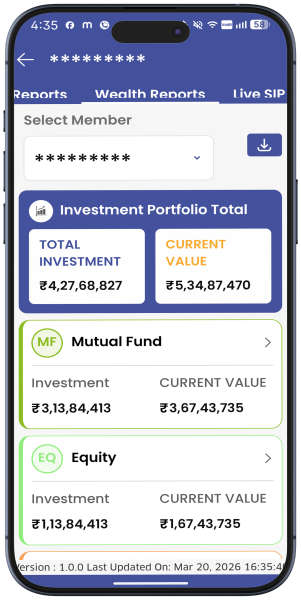
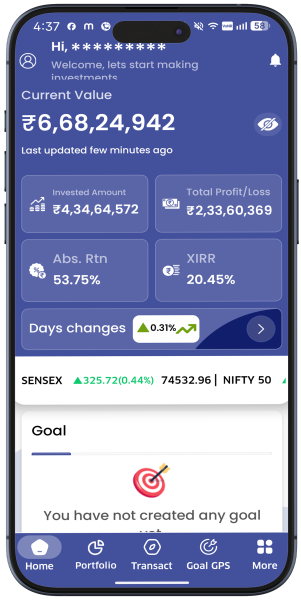
Smart investing starts here-explore mutual funds, demat, unlisted shares, diversified investments, and powerful planning tools all in one app.




Designed for Serious Wealth Builders!
Unlock carefully selected, high-growth investment opportunities.
Speak with our advisors or Submit your inquiry now