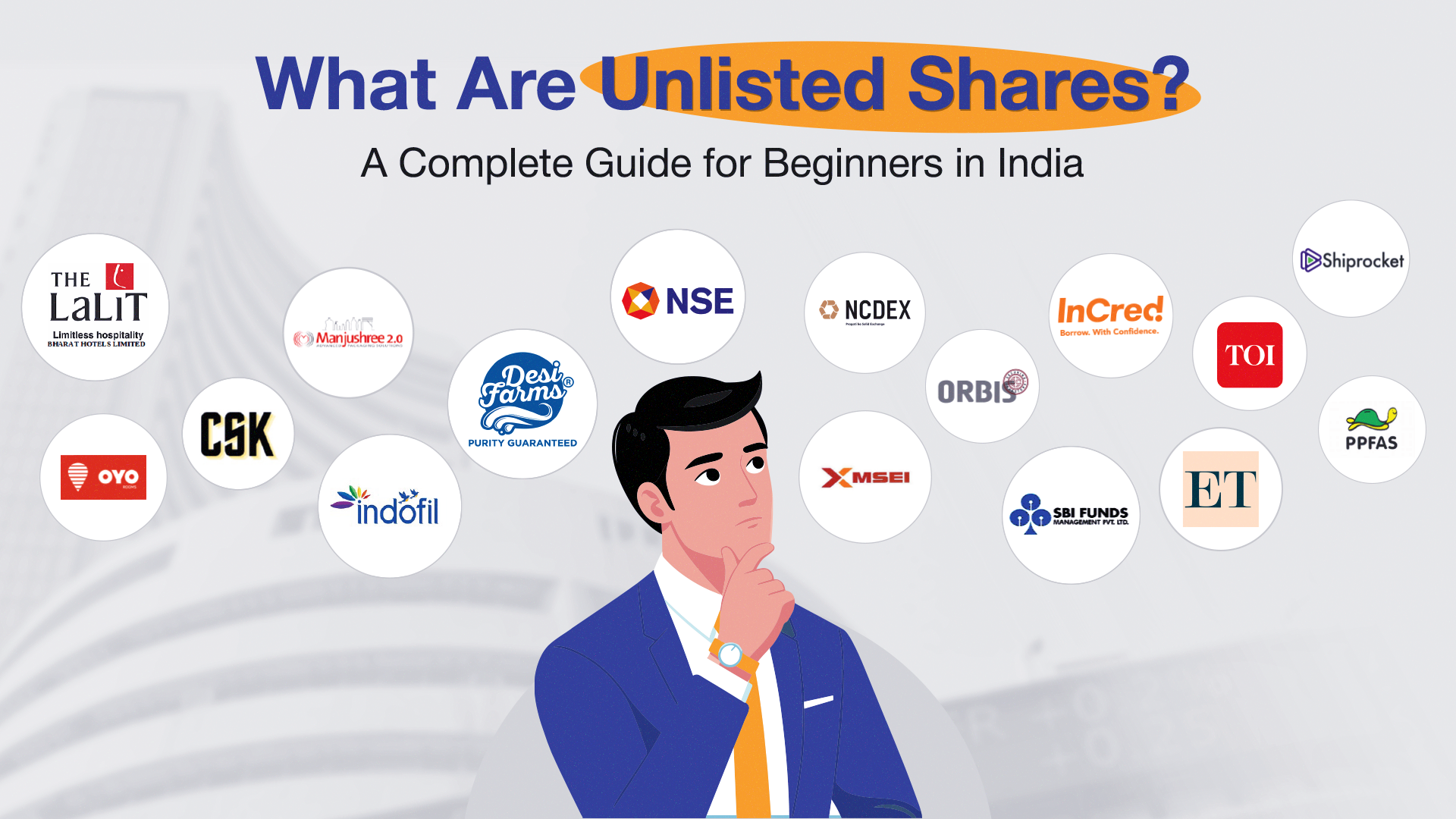
What Are Unlisted Shares? A Complete Guide for Beginners in India
Most people start investing by buying shares listed on the stock market. But there is another part of the market where many investors are curious about unlisted shares.
These are shares of companies that are not yet available on stock exchanges like NSE or BSE. Because of this, they work a little differently and are often less understood, especially by beginners.
If you're hearing about unlisted shares for the first time, this guide will help you understand what they are, how they work, and what to keep in mind before investing.
What Are Unlisted Shares?
Unlisted shares are shares of companies that are not publicly traded on stock exchanges.
This means you cannot buy or sell them using a regular trading app.
These companies may still be well-known or growing businesses, but they have not gone public yet. Some may be planning to launch an IPO in the future, while others may choose to stay private for a longer time.
In simple terms: Unlisted shares represent ownership in a company that is not listed on the stock exchange.
This is why many investors are interested in invest in unlisted companies before they become publicly available.
How Are They Different from Listed Shares?
The main difference comes down to accessibility and trading.
Listed shares are easy to buy and sell because they are traded openly on stock exchanges. Prices are visible, and transactions happen instantly.
Unlisted shares, on the other hand, are traded privately. There is no live market price, and transactions happen through specific channels rather than public exchanges.
This makes them less liquid and slightly more complex compared to regular shares.
Why Do People Invest in Unlisted Shares?
The main reason is early access.
Some investors want to invest in companies before they become publicly available. If a company grows well and eventually gets listed, early investors may benefit from that growth.
This is often linked to pre-IPO investing, where people look for opportunities before a company enters the public market.
That is why popular unlisted shares and companies with strong future potential often attract attention. But it's important to remember that this also comes with uncertainty. Not every company will perform well or go public.
What Are Pre-IPO Shares and IPO Listing?
Pre-IPO shares refer to shares of companies that are expected to launch an IPO soon. Unlisted shares include all companies that are not listed, whether or not they plan to go public. So, pre-IPO shares are a smaller part of the broader unlisted market. Whereas An IPO (Initial Public Offering) is when a private company offers its shares to the public and gets listed on the stock exchange.
- Pre-IPO shares are shares bought before a company becomes publicly listed.
- IPO listing is the stage when a company officially starts trading on the stock exchange.
What Happens to Unlisted Shares After Listing?
If a company you invested in through unlisted shares eventually gets listed, your shares may later become tradable in the listed market, depending on the applicable process and holding conditions.
This is one of the reasons why some investors choose to invest in unlisted shares early.
But this should not be the only reason to invest. A company should also be evaluated on its business quality and long-term potential.
How Are Unlisted Shares Traded?
Unlike listed shares, unlisted shares are not traded through stock exchanges.
They are usually bought and sold through:
- Private deals
- Specialized brokers
- Certain investment platforms
Once purchased, the shares are transferred to the investor's Demat account, similar to regular shares. This process is often referred to as unlisted shares buying and selling. However, the process is not instant and may take time depending on the transaction.
Can You Buy Unlisted Shares Online?
Yes, in many cases, you can now buy unlisted shares online.
Over the last few years, access to unlisted shares online in india has become easier through selected investment platforms and intermediaries.
This means investors no longer always need offline market contacts to participate. Some platforms now help users explore unlisted shares in india online in a more organized way.
Still, since this is not a live exchange-based market, it is important to use a reliable source.
That is why many investors look for the best platform to buy unlisted shares in india or the best place to buy unlisted shares before taking any step.
How the Buying Process Works
If you are wondering how to buy unlisted shares, the process is actually simple once you understand the flow.
Step 1: Choose a trusted source
The first step is to choose a platform or broker that deals in unlisted company shares.
This is important because pricing, availability, and transfer quality matter a lot in this market.
Step 2: Check the company details
Before investing, understand:
- What the company does
- How strong its business is
- Whether it has long-term potential
- What its current unlisted share price is
Step 3: Confirm the deal
Once the quantity and price are agreed, the transaction is processed.
Step 4: Shares are transferred
The shares are then transferred to your Demat account.
That is the basic process of how to buy unlisted share or how to purchase unlisted shares in India.
What About Selling Unlisted Shares?
Buying is one side of the process. Selling is another.
If you are asking how to sell unlisted shares, the process is usually done through the same kind of broker or platform that helps with buying.
In simple terms, sell unlisted shares happens through private market demand rather than public stock exchange trading.
This means:
- Selling may take more time
- Pricing may vary
- Liquidity may be lower than listed stocks
So before investing, it is important to understand not just how to buy unlisted stocks, but also how to sell unlisted shares when needed.
Are Unlisted Shares Risky?
Yes, unlisted shares generally carry more risk than listed shares.
Some of the key risks include:
Limited Liquidity
You may not be able to sell quickly when needed.
Less Public Information
Financial details may not be as easily available as listed companies.
Price Variations
There is no single market price, and values may differ between transactions.
Uncertain Future
Not all companies will go public or grow as expected.
Because of this, unlisted shares are usually better suited for investors who are comfortable with long-term holding.
How Is the Price of Unlisted Shares Decided?
Unlike listed stocks, there is no live exchange screen showing the exact price every second.
The unlisted share price is usually based on:
- Company demand
- Available supply
- Financial performance
- Investor interest
- Expected future growth
- IPO expectations (if any)
This is why investors often check a pre ipo share price list, unlisted shares price list, or unlisted shares list with price before making a decision.
The value may vary slightly depending on the source, so price transparency matters a lot.
Who Should Consider Investing in Unlisted Shares?
Unlisted shares are generally more suitable for people who:
The unlisted share price is usually based on:
- Understand market risks
- Are comfortable with longer investment timelines
- Do not need quick liquidity
- Are interested in private or early-stage opportunities
For beginners, it is usually better to first understand basic investing before entering this space. If you are trying to identify best unlisted shares for long term, focus on business quality, not just popularity.
Things to Check Before Investing
Before investing in any unlisted company, take time to understand:
1. The Business Model
Know what the company does and how it earns money.
2. Growth Potential
Look at whether the company is expanding or stable.
3. Financial Health
Check available financial information if possible.
4. Market Demand
Some shares are easier to trade than others.
5. Long-Term Outlook
Unlisted shares often require patience.
Taking time to evaluate these factors can help you make better decisions.
Should Beginners Invest in Unlisted Shares?
Beginners can explore this space, but it should not be the starting point.
It is better to first understand:
- How the stock market works
- How Demat and trading accounts function
- How listed investments behave
The goal should not just be to buy unlisted shares, but to understand why you are buying them. That mindset is much more important than entering quickly.
Final Thoughts
Unlisted shares offer access to companies that are not yet part of the public market.
They can be interesting for investors looking beyond regular stock investing, but they also come with added complexity and risk.
To keep it simple:
- They are not traded on stock exchanges
- They are bought and sold privately
- They may require longer holding periods
- They need careful research before investing
If you approach them with patience and understanding, they can become a part of a broader investment strategy.
But like any investment, clarity matters more than speed.